
The Lutheran Study Bible
Concordia Publishing HouseBooks & Reference
4.447.00 Reviews
- Version
- 1.1.5
- Installs
- 10.00K
- Age Rating
- Everyone
Screenshots


Our Review of The Lutheran Study Bible
 Analysis by Appyee
I approached The Lutheran Study Bible as both a Bible-reading tool and a reference app, not simply as a digital replacement for a printed volume. Developed by Concordia Publishing House, it sits in the Books & Reference category and is aimed at readers who want Scripture alongside Lutheran study material. That distinction matters: if you only want a clean Bible reader for quick passages, this may feel more substantial than necessary. If you want context while reading, its central idea is much more appealing.
My first impression was that the app makes its purpose clear. It is free to install, suitable for Everyone, and available for devices running Android 10 or later. The current version is 1.1.5, and the app has passed the early stage of being an unknown experiment: it has more than ten thousand installs, with a 4.4 average from roughly one hundred ratings and dozens of written reviews. Those figures suggest a generally positive reception, although I would still treat the app as a focused study resource rather than a universal Bible app for every kind of reader.
What it is like to use the Bible with study notes
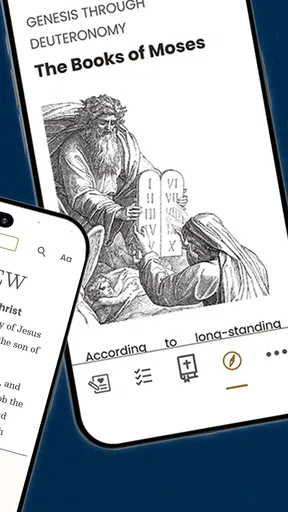
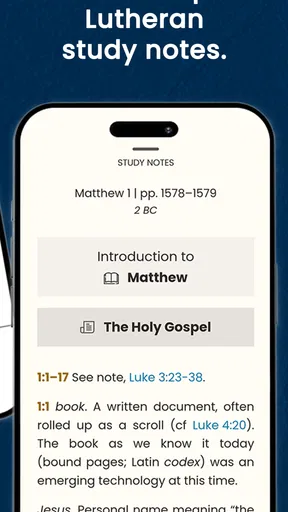
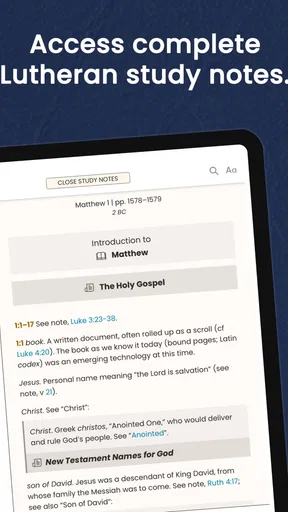
The main value here is the relationship between the biblical text and the explanations around it. Instead of reading a passage in isolation and then opening a separate commentary, I can use the app as a single place for reading and reflection. That is especially useful when a verse depends on historical setting, theological vocabulary, or a connection to another part of Scripture.
I found this approach more helpful during slower reading than during a quick search. For a short morning reading, I might open a familiar passage, read it through, and then check the notes only where something catches my attention. That keeps the notes from interrupting every line. For a longer study session, I can move back and forth between the passage and the explanatory material, which feels closer to working with a study edition than with a basic phone Bible.
The Lutheran perspective is not a minor detail. Readers who specifically want Lutheran interpretation will likely appreciate that the notes are organized around that tradition rather than presenting a deliberately tradition-neutral experience. On the other hand, someone looking for a broad comparison of Catholic, Orthodox, Protestant, or academic viewpoints may find the app too focused. I would not choose it as my only reference if my goal were comparative theology.
The best everyday use case I found is a quiet reading routine where I have ten or fifteen minutes and want more than a verse-of-the-day format. I can read a section, pause at a difficult idea, consult the note, and continue without gathering several books around me. It is also practical for a small-group discussion when I want to check the surrounding passage before offering an opinion. I would still verify any important scholarly question with additional sources, but the app gives a useful starting point for personal study.
Why the notes change the reading experience
A standard Bible app usually wins on speed and simplicity. It may offer fast searching, multiple translations, bookmarks, or a distraction-free reading screen. A printed Bible usually wins on physical orientation: I can see the page, remember where a passage sits, and write in the margins. This app occupies a different middle ground. It is more portable than a study Bible and more interpretive than a plain text reader.
That middle ground creates a trade-off. The extra material can make a passage feel richer, but it can also make the screen busier. I would not recommend opening it when I want to read quickly during a short break and avoid all commentary. For that purpose, a simpler Bible reader may be better. The Lutheran Study Bible makes more sense when I am willing to slow down and investigate.
One useful habit is to read the biblical passage completely before opening the notes. That gives me my own first impression and reduces the chance that the commentary will determine what I notice. Afterward, I can use the notes to test, deepen, or correct that first reading. This workflow makes the app feel less like an answer machine and more like a study companion.
Another practical tip is to use the notes selectively. I do not need to inspect every explanation in one sitting. Choosing one difficult paragraph or one unfamiliar term keeps a session manageable and makes it easier to remember what I learned. This is a small difference from simply scrolling through a large amount of reference material, but it makes the app more useful on a phone.
Trust, permissions, and what I can actually judge
Because this app deals with religious reading, I think trust deserves attention beyond whether the interface is pleasant. The developer is clearly identified as Concordia Publishing House, and the app presents itself as a study resource rather than as a social network or entertainment product. That gives me a straightforward reason to install it, but I still prefer to review privacy choices and permissions on my own device before using any app regularly.
I would not treat a familiar developer name as a substitute for checking the permission screen. Android shows requested access during installation or in the system settings, and that is where I would look for the controls that apply to my device. If a permission seems unrelated to reading Scripture or consulting notes, I would pause and decide whether I am comfortable granting it. The important point is that the decision remains visible at the operating-system level rather than being something I should assume.
The same caution applies to account controls. I would check whether the app asks me to sign in, whether an account is optional or necessary for a particular function, and whether I can use the core reading experience without creating a profile. I would also look for any settings that affect notifications, synchronization, or personalization. These are ordinary checks, but they matter when an app becomes part of a daily routine.
The app includes optional purchases priced from $2.99 to $9.99 per item. That makes the free entry point useful, but it also means I would inspect each purchase screen carefully before confirming anything. I want to know what an item unlocks, whether it is relevant to my reading habits, and whether the purchase is being made through the normal platform billing flow. A free download is not the same thing as an entirely cost-free experience, so I appreciate having that distinction in mind from the beginning.
Where privacy choices matter most in daily use
The most data-sensitive moments are usually not the act of reading a chapter itself, but the surrounding choices: signing in, enabling synchronization, allowing notifications, making a purchase, or sending feedback. I would handle those moments separately instead of accepting every prompt automatically. For a Bible app, I may want a quiet reading tool without sharing more activity than necessary.
Notifications are a good example. A reminder can support a reading habit, but it can also reveal to someone looking at my phone that I use a particular religious app. I would enable reminders only if they genuinely help me, and I would review how they appear on the lock screen. If the app offers notification categories, I would keep only the ones I understand and want.
Purchases deserve the same deliberate approach. I would avoid tapping through an offer simply because I am already reading. Instead, I would compare the included material with what I actually need from a study Bible. Someone who wants the core reading experience may find the free version sufficient, while a committed student may decide that an additional item is worthwhile. The right choice depends on the content of the offer, not on the presence of a discount-style prompt.
I also recommend checking Android’s app settings after installation rather than relying only on the first-run prompts. This lets me review permissions later, turn off access I no longer want, and see whether the app has become more demanding after an update. That is a useful habit with any reference app, especially one I plan to keep on my phone for months.
How much control the reader keeps
The strongest form of user control here is choosing how deeply to engage. I can treat the app as a straightforward reader, or I can use the notes as a doorway into more serious study. I do not have to turn every reading session into a research project. That flexibility is important because spiritual reading habits vary widely: some days call for a short passage, while others invite careful examination.
I would also keep my own notes outside the app if the material is especially important to me. A separate journal or document gives me an independent copy of reflections and makes them easier to use across different devices or study tools. This is not a criticism of the Bible content; it is a sensible safeguard against depending entirely on one app for personal work.
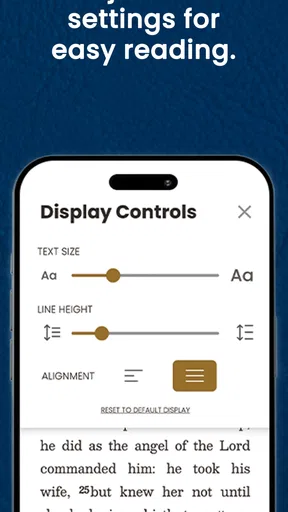
Readers should also think about screen comfort. A phone is convenient, but long study sessions can be tiring compared with a printed book or a larger tablet. I would use the app for targeted reading, travel, waiting rooms, and short study periods, then switch to a physical Bible or larger screen when I want to spend an hour examining a passage. The app’s portability is a strength, but portability should not be confused with the best format for every session.
Another point of control is interpretive awareness. Because the notes come from a Lutheran study perspective, I would read them as informed guidance within that tradition, not as a replacement for every other possible reading. That makes the app especially suitable for Lutheran readers, congregational study, and people exploring that tradition. It makes it less suitable for someone who wants commentary presented without a denominational framework.
Who should install it, and who should choose something else
I would recommend this app to a reader who wants a Bible and in-depth notes in one place, values a Lutheran perspective, and is comfortable making deliberate choices about optional purchases and device permissions. It is a good fit for personal devotion, structured reading, sermon preparation at an introductory level, and discussion groups where context is more useful than rapid verse lookup.
I would be more cautious about recommending it to a reader who wants a minimalist interface, extensive cross-tradition comparison, or a tool built mainly for memorization and quick searching. A plain Bible reader may be faster for locating a verse. A printed study Bible may be better for extended annotation and visual navigation. A broad academic reference platform may be better for comparing interpretations. Choosing one of those alternatives would not mean this app is poor; it would mean the reader has a different priority.
Families should also consider the Everyone rating in context. It indicates broad age suitability, but parents may still want to explore the app themselves before handing a device to a child, particularly if optional purchases are enabled through the device account. The age rating is reassuring for general access, yet normal household controls remain worthwhile.
My cautious verdict after using it
The Lutheran Study Bible is most convincing when I use it slowly and intentionally. Its strength is not novelty or a huge collection of unrelated tools. Its strength is bringing Scripture and Lutheran study notes together in a portable format from Concordia Publishing House. That focused purpose gives it a clear identity and makes it more useful than a generic Bible reader for the right audience.
I would not install it expecting a completely neutral reference library or a replacement for every Bible-study method. I would install it because I want guided context while reading and because I appreciate having that material close at hand. The optional purchases mean I would review each offer rather than assuming everything is included, and I would check permissions, notifications, account requirements, and purchase settings before settling into regular use.
Overall, the app earns my recommendation for Lutheran readers and for anyone specifically seeking a study Bible shaped by that tradition. My recommendation is more qualified for readers who prioritize minimalism, comparative scholarship, or extensive personal annotation. Used with those boundaries in mind, it is a practical free starting point for deeper reading, with enough substance to support a real study habit rather than just occasional verse lookup.
Verdict
Strengths of The Lutheran Study Bible
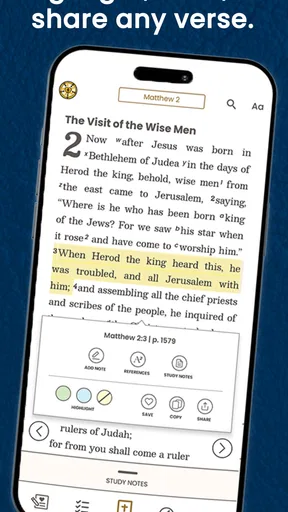
- Extensive cross-references help connect related passages quickly.
- Includes study notes from a distinctly Lutheran theological perspective.
- Readable layout makes longer Bible study sessions comfortable.
- Useful for comparing Scripture with historical Lutheran teachings.
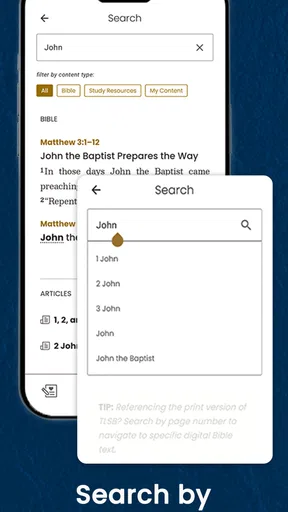
- Search tools make it easy to locate verses, topics, and notes.
Limitations of The Lutheran Study Bible
- Its Lutheran interpretation may not suit users from other denominations.
- The large study content can require significant storage space.
- Some features may feel dated compared with newer Bible apps.
- Advanced study tools can take time for first-time users to learn.
- May offer less value to readers seeking a purely text-only Bible.
Similar Picks in This Category
View All
Google Play Books & Audiobooks
Google LLC4.7

네이버 - NAVER
NAVER Corp.3.5

Wattpad - Read & Write Stories
Wattpad.com3.7

King James Bible - Verse+Audio
Ozion4.8

Bible Offline-KJV Holy Bible
Bíblia Offline4.9

Amazon Kindle: Reading App
Amazon Mobile LLC4.8
Frequently Asked Questions
What is The Lutheran Study Bible app?
The Lutheran Study Bible app is a digital Bible study resource designed for readers who want to explore Scripture alongside Lutheran explanations, notes, introductions, and supporting references. It is more than a basic Bible reader because it combines the biblical text with study material intended to provide historical, theological, and practical context. The exact features may vary depending on the edition and platform available.
What study features are included in The Lutheran Study Bible?
The app typically focuses on helping users understand the Bible through verse notes, book introductions, cross-references, outlines, and explanatory material rooted in Lutheran teaching. Depending on the version, users may also find search tools, bookmarks, highlighting, reading plans, and personal notes. Before downloading, it is worth checking the store description to confirm which features are included in the current release.
Does The Lutheran Study Bible require an internet connection?
An internet connection may be needed initially to download the application, Bible content, or additional study resources. After the material has been downloaded, many reading functions may work offline, which is useful for church, travel, or personal study without reliable mobile data. However, synchronization, updates, account services, or certain media features can still require internet access, so offline availability should be verified on your device.
Is The Lutheran Study Bible suitable for beginners?
Yes, the app can be useful for beginners, especially readers who want guidance while learning how the Bible is organized and interpreted within the Lutheran tradition. Introductions and explanatory notes can make difficult passages easier to approach. Nevertheless, some theological language may be unfamiliar to new readers. Beginners may benefit from reading the notes gradually and comparing them with the biblical text rather than treating every explanation as a substitute for personal study.
Is The Lutheran Study Bible free to download and use?
The availability and price of The Lutheran Study Bible can differ between Android and iOS, as well as between editions or publishers. Some versions may be free to install but offer paid access to the complete Bible text, study notes, or premium tools through an in-app purchase. Check the official app-store listing carefully for pricing, subscriptions, advertisements, supported devices, and included content before completing the download.
